
How Glyph Levels Impact Endgame Damage in Diablo 4
For many Diablo 4 players, one of the most pressing endgame questions is whether leveling glyphs beyond 51 is truly worth the grind. Glyph progression is one of the longest time investments in the game, and players often wonder if the extra effort translates into meaningful damage gains. Many guides showcase astronomical damage numbers, yet even players with similar gear and builds struggle to replicate them. The key factor behind these discrepancies lies in glyph levels, Paragon optimization, and the way Diablo 4 Items calculates damage multipliers.
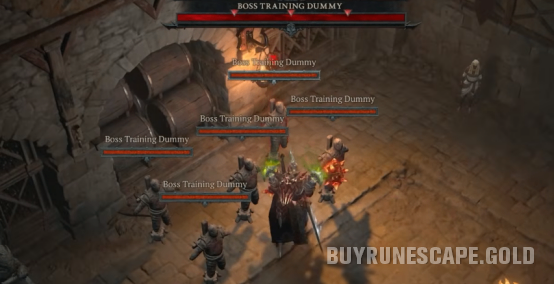
A controlled experiment using identical builds, gear, skills, and Paragon boards revealed how dramatic the difference can be between level 51, 100, and 150 glyphs. The results provide clear insight into why some characters hit for trillions while others fall far short.
Testing Setup
To isolate the effect of glyphs, the experiment used three nearly identical versions of the same character. Everything was held constant:
Gear, skill trees, Paragon boards, legendary powers, talismans, set bonuses, and combat rotations.
Environment: training dummy for controlled damage testing.
The build employed the following skills: Marshal, Dominate, Challenger, Wrath, and Might. Paragon boards included Starter Board, Decimator, Blood Rage, Carnage, and Flawless Technique. The goal was simple: build Overpower stacks, execute the same attack rotation, and record peak damage at each glyph level.
Level 51 Glyphs: The Baseline
With level 51 glyphs, the build produced consistent damage between 1.5 trillion and 1.9 trillion, with the highest hit around 1.9 trillion.
Many players stop at this level, as it unlocks most of a glyph’s core bonuses and has historically been considered sufficient for endgame builds. However, this test showed that stopping at 51 leaves significant damage potential untapped.
Level 100 Glyphs: A Massive Leap
Increasing glyphs to level 100 while keeping everything else identical caused a dramatic increase in damage. The first attack cycle produced hits exceeding 5 trillion, and consistent damage ranged between 5.5 and 8.4 trillion.
Compared to the 1.9 trillion peak at level 51, the increase was over four times higher—all without changing gear, talents, or legendary powers.
This explains why players often cannot replicate guide numbers: if a guide creator has fully leveled glyphs while a player remains at level 51, the difference can be measured in multiple trillions.
Level 150 Glyphs: The Final Push
Testing fully leveled level 150 glyphs produced hits between 9 and 10.5 trillion. Peak damage included 9.5, 9.7, 10.4, and 10.5 trillion.
While the increase from 100 to 150 is noticeable, it is smaller than the jump from 51 to 100. Still, for players seeking maximum optimization or leaderboard-level performance, the extra 2 trillion damage is substantial. Casual players may find the grind less rewarding at this stage.
Damage Comparison
Glyph LevelApproximate Peak Damage
511.9 trillion
1006–8.4 trillion
15010–10.5 trillion
Key takeaways:
Glyph levels matter far more than most players realize.
Reaching level 100 provides one of the largest endgame damage spikes.
Level 150 still adds value but with diminishing returns compared to the 51→100 jump.
Why Glyphs Scale So Well
Many players underestimate glyphs, thinking they provide minor bonuses. In reality, glyphs add massive additive damage and unlock powerful interactions with Paragon boards.
Glyphs influence:
Additive damage
Stat scaling
Paragon board synergies
Radius expansion and surrounding node effects
A fully leveled Dominate glyph, for instance, can provide thousands of points of additive damage, which then multiply with other bonuses to produce exponential growth.
The Biggest Damage Misconception
Players often fixate on character sheet numbers like Critical Strike Damage or “All Damage,” believing these indicate their true potential. However, the sheet rarely reflects how multiplicative effects interact.
The experiment highlights that focusing on the following is more meaningful:
Additive and multiplicative damage sources
Glyph scaling
Paragon optimization
Affix quality
True damage arises from the interplay of all these factors, not a single stat.
Multipliers Are King
The strongest builds stack a variety of damage multipliers:
Critical Strike Damage
Vulnerable Damage
Physical Damage
Overpower Damage
Damage over Time
Class-specific multipliers
Diversity matters. Adding more of the same multiplier yields diminishing returns, while introducing a new multiplier category provides bigger gains. Top players carefully balance stats across gear rather than stacking one damage type.
Greater Affixes Matter
Two items with the same stat may perform very differently depending on roll quality. For example, 26% Critical Strike Damage versus 50% Critical Strike Damage can drastically affect overall damage. Optimizing all gear with high-quality affixes compounds these effects across the build.
Every Point Counts
Even minor upgrades, like a single Paragon point, can produce noticeable differences on training dummies. Diablo 4’s endgame rewards cumulative optimization: dozens of small improvements combine to generate massive damage gains.
Talismans Are Crucial
Optimized talismans also contribute significantly. Removing combat-related talisman bonuses dropped peak damage from ~10 trillion to 7–8 trillion—a loss of nearly 2 trillion damage. Many players focus heavily on gear but overlook talismans, which can provide enormous endgame value cheap Diablo 4 Items.
Should You Push Glyphs to 150?
It depends on your goals:
Efficient progression: Level 100 glyphs deliver the biggest return on investment. The 51→100 jump provides dramatic damage gains.
Max-mining or leaderboard content: Level 150 glyphs still offer significant gains, but the grind is increasingly demanding, and rewards arrive more gradually.
Final Thoughts
Glyph leveling is one of the most powerful forms of endgame progression in Diablo 4. The experiment clearly shows that a build dealing ~2 trillion damage at level 51 can surpass 10 trillion at level 150, all without changing gear, skills, or Paragon boards.
Glyphs are essential, but they are just one part of the damage equation. Multipliers, Greater Affixes, Paragon optimization, talisman bonuses, and careful stat management collectively contribute to top-tier damage.
For players wondering why their characters fall short of guide numbers, the answer is rarely one missing item. It’s the accumulation of dozens of small optimizations working together.
In Diablo 4’s endgame, every point matters, every glyph level counts, and the difference can be measured in trillions of damage.
